Wednesday 30 September 2026 | Join Free | Upgrade

Together with

Hi there, this is your daily ☕️ Techpresso.

In today's newsletter:

🤖 OpenAI launches Dots, its Muse competitor

🏠 Apple smart home hub may launch soon

🤝 Trump releases a voluntary AI accord with tech leaders

💸 Robinhood launches AI trading agents

🇨🇳 DeepSeek, Huawei team on AI chip software

💰 GPT-6.1 Sol nears Astra performance

Plus: 🎁 14 more stories you might like, 🧰 6 tools, and 📚 5 papers.

FROM OUR PARTNER

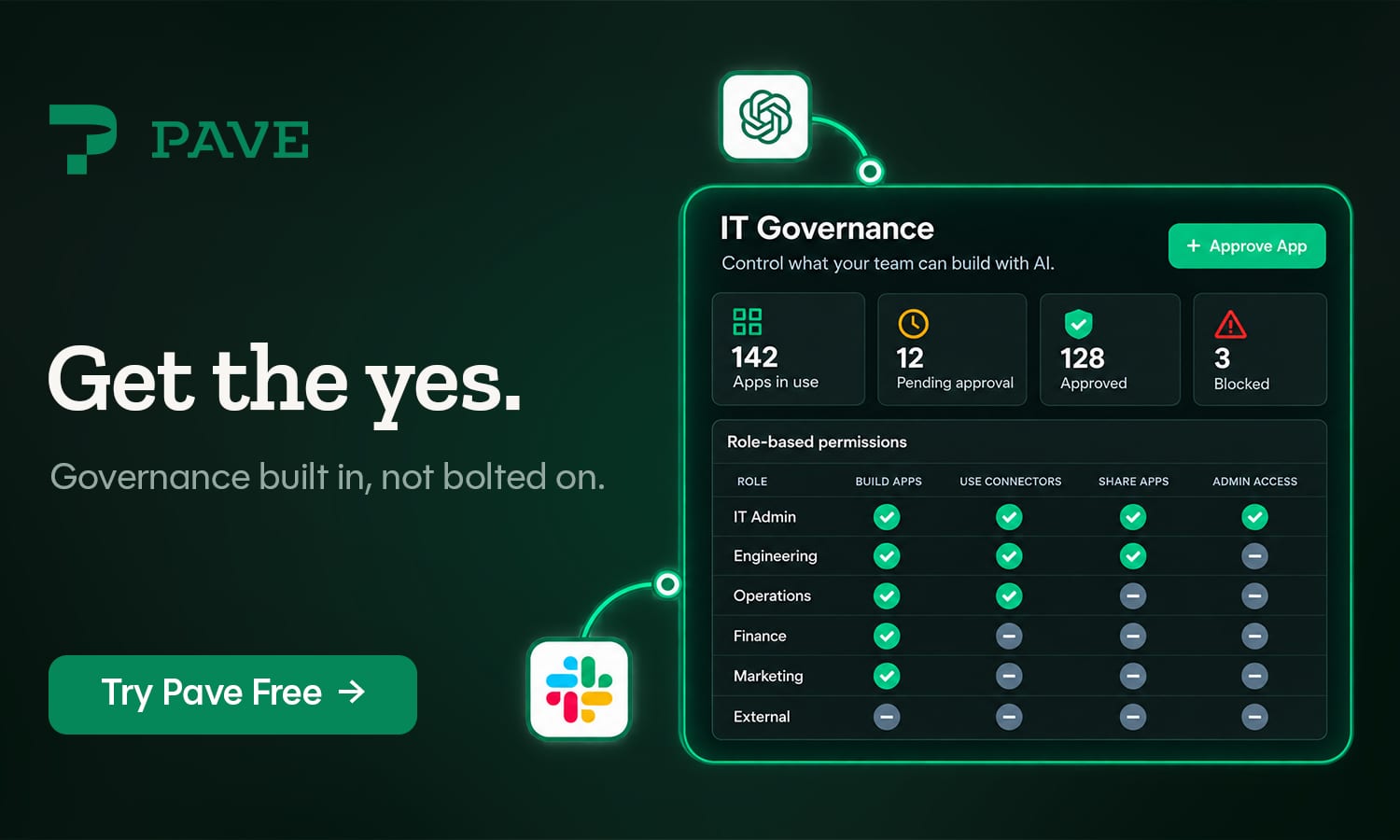
People are building with AI whether IT approves or not.

Pave gives them a governed lane:

• role-based permissions,

• a draft-to-publish gate, and

• an admin view of every connector and workflow.

Built on Quickbase's 25-year enterprise platform

Your data never trains the AI

See who can do what, in one place

Try Pave Free
🤖 OpenAI launches Dots, its Muse competitor LINK
  • OpenAI has launched Dots at its Dev Day event, a personal always-on assistant running on GPT-6 Astra, positioned as its answer to Meta's recently released Muse agent.
  • Unlike Codex or ChatGPT, Dots work independently of any device or interface, chasing user-set goals in the background, and are available now to Pro and Business Premium users through ChatGPT in eligible markets.
  • People can message Dots through Slack, Teams and similar platforms, with text support coming soon, and OpenAI is working with Microsoft to fold them into its Agent 365 security controls.
🏠 Apple smart home hub may launch soon LINK
  • Apple's smart home hub, nicknamed the HomePad, is expected to arrive on October 13, according to a Bloomberg report that pins down a date after earlier saying only that it would come "as soon as October."
  • The device will reportedly have a 6-inch screen and borrow the look of the iMac G4, with its rounded base and floating display, and come in two forms: one for tabletops and one meant to mount on a wall.
  • A built-in speaker will let the hub work as a HomePod and smart home panel, running a new operating system that mixes parts of iOS, tvOS, and watchOS, all centered on Siri AI.
🤝 Trump releases a voluntary AI accord with tech leaders LINK
  • Donald Trump has put out a one-page voluntary agreement with six big tech companies laying out safeguards for advanced AI systems, calling for outside audits, board oversight and internal monitoring without creating any legal duties.
  • Signed by Trump plus the heads of Google, Anthropic, Meta, OpenAI, xAI and Nvidia, the accord asks firms to bring in independent auditors and watch models during training for cybersecurity, biosecurity and chemical threats.
  • The document, which Trump called "morally binding," sets no enforcement body or penalties but suggests the measures could later become law, and the companies agreed to meet regularly to build shared safety standards.
💸 Robinhood launches AI trading agents LINK
  • Robinhood is adding AI trading agents to its app, letting customers build strategies and have the software research markets and place buy and sell orders on their behalf around the clock, within limits they set.
  • Users name their agent, open a separate account for it, and pick an AI model from labs including OpenAI, whose GPT-Luna will be free through year's end; a coming feature called Loops repeats a strategy day and night.
  • The move follows Robinhood's May launch that let people connect their own agents, which drew over 150,000 accounts; by default customers must approve each trade, an agent can only touch money in its own account, and both settings can be switched off.
🇨🇳 DeepSeek, Huawei team on AI chip software LINK
  • DeepSeek has partnered with Huawei to build open-source programming tools for Huawei's Ascend AI chips, aiming to give China's homegrown hardware the software it needs to run advanced models well.
  • The release centers on TileLang, an open-source programming language first made by Peking University researchers, which DeepSeek says is simpler to work with than Nvidia's CUDA while still pulling full performance from the chips.
  • The tools include libraries for computation and for moving data between chips, and the two companies also tuned a "supernode" cluster of 128 Ascend 950 chips, with Huawei fully backing the effort.
💰 GPT-6.1 Sol nears Astra performance LINK
  • OpenAI has launched GPT-6.1 Sol, a midrange model that costs one-fifth as much as its top model GPT-6 Astra while coming close to Astra's performance, unveiled Tuesday at the company's developer conference.
  • The release came a day after OpenAI dropped a planned GPT-6.1 Astra, saying the model too often ignored instructions, part of a wider push into safety after a run of security lapses with its agents.
  • GPT-6.1 Sol arrives amid a price war with Anthropic, which passed OpenAI in second-quarter revenue at $11.6 billion versus $6.7 billion, as OpenAI's operating loss widened to $12.3 billion.

FROM OUR PARTNER

Every team shipping MCP servers should pay attention to the July 2026 spec revision.

Sessions are gone.

DCR is deprecated in favor of CIMD.

And there are six new authorization SEPs your server is now expected to handle.

This developer breakdown from Descope covers:

• What changed in the transport layer, and why sessions were removed

• The six new authorization SEPs, explained without the spec-speak

• Enterprise-Managed Authorization (EMA) and what it means for consent sprawl

• A migration checklist to run against your existing MCP server

Read the breakdown before your next MCP deployment.

Other news & articles you might like

  • 'Clearly wrong': How Musk's Anthropic feud turned into an $84.5B compute deal LINK
  • Google paying ~100 publishers 0.1% of ad revenue in AI Contribution Pilot LINK
  • Amazon’s new Fire TV Stick 4K comes with an actually good remote LINK
  • Samsung’s SmartTag 3 is smaller, smarter, and iPhone-friendly LINK
  • Anthropic claims popular Chinese AI model has Mythos-class hacking abilities LINK
  • Scoop: OpenAI's annual recurring revenue nears $70B LINK
  • OpenAI hit with landmark lawsuit following Hugging Face hack LINK
  • Meta slashed its federal tax bill nearly 71% by labeling AI data centers experimental LINK
  • Connected car data privacy is still abysmal, study finds LINK
  • AI models keep posting screenshots showing sensitive data from inside tech companies LINK
  • Cloudflare to become a public certificate authority with post-quantum certificates LINK
  • The case for Meta Enterprise Platform LINK
  • Apple reportedly planned to replace 5,000 support employees with AI LINK
  • Chinese tokamak achieves hydrogen-boron fusion with 100 million reactions a second LINK

🧰 Trending tools

Jason AI SDR: books qualified demos on autopilot – it finds, engages, and follows up with your ideal prospects so your sales team only shows up for meetings that matter. Book your demo today
Bleetz Network: matches your startup with thousands of simulated VC agents that pitch funds, return yes, no, or maybe verdicts, and unlock interested investors' contacts. LINK
Imejis.io: gives AI agents a design studio via MCP to generate deterministic, production-ready graphics like OG images, social cards, charts, and QR codes at scale. LINK
WebinarFlow: records your demo once so prospects watch on demand, letting you join live only for real questions while AI learns to answer repeats. LINK
Speek: a Mac notch voice assistant that dictates, edits selected text, and runs quick or background tasks across your apps and accounts. LINK
Subscrr: tracks all your recurring subscriptions in one place, sends renewal reminders, and flags duplicates, price hikes, and savings using AI. LINK
CrawlRaven MCP: combines Search Console, GA4, keyword lists, and site crawls into one impact-ranked SEO plan, accessible from Claude, ChatGPT, or Cursor. LINK

You can check the previous tools here, or add your tool here

📚 Trending papers & reports

> Reach 900,000+ tech professionals: If your company is interested in reaching an audience of tech executives, decision-makers and engineers, you may want to advertise with us.
> Rare-disease diagnosis gets an AI system that reasons over a medical knowledge map to rank likely rare conditions, edging out GPT-5.5 while curbing invented or implausible disease names. LINK
> Word-association tests reveal that chatbots internally switch between exploiting one topic and exploring a new one much like humans do, and nudging those internal signals can steer which topics the model jumps to next. LINK
> Robot self-improvement lets machines learn from their own mistakes by recreating failures in simulation, boosting success on unfamiliar tasks by ~19 points without gathering costly new real-world demonstrations. LINK
> A recommender data standard gives companies a common format for stitching together mismatched product and user datasets, letting different recommendation systems share information and surface connections that isolated data alone would miss. LINK
> Deployed model tune-ups more smartly pick which cases to send for human review as real-world data drifts, delivering about 5% higher accuracy while spending the same labeling budget. LINK

🤝 From our community: Turning mood briefs into Midjourney prompts

Ava Chen feeds a mood description into ChatGPT and asks for five Midjourney prompts specifying subject, style, lighting, and aspect ratio, so images match the brief on the first try and she saves about two hours a week.

Read the full use case →

You can see more community use cases here, or submit your own here.

🎓 Want to master the AI tools we cover every day?

Techpresso's AI Academy has 330+ step-by-step tutorials on ChatGPT, Claude, Perplexity, and every tool that matters. No fluff — just practical workflows you can use at work. Try it free for 7 days.

Did you know? The first web browser, WorldWideWeb, was also a page editor, letting you create web pages as well as read them.

💬 How did you find today's edition?

We read every reply — just reply to this email and let us know how we can improve!

★★★★★  Nailed it
★★★  Average
★  Fail

Not subscribed to ☕️ Techpresso yet? Subscribe for free